


Aerospace Cabling and Connectors: Powering the Future of Flight
Overview of Fiber Optic and Copper Cables in Aerospace.
The aerospace industry has always stood at the frontier of technological innovation, pushing the boundaries of what’s possible. At the heart of these advancements over the years lie intricate networks that form the underlying nervous system of every aircraft, satellite, and space vehicle. Both fiber optic and copper cables play central roles in aerospace applications, from avionics and flight control systems to in-flight entertainment and satellite communications.
Fiber optic cables, using light to transmit data, have revolutionized aerospace communications. These slender strands of glass or plastic, no thicker than a human hair, carry vast amounts of information at the speed of light. In aerospace applications, fiber optics offer unparalleled bandwidth, allowing for the transmission of complex data sets essential for navigation, communication, and aircraft management systems.
Copper cables, the traditional workhorses of electrical systems, continue to form an important part of electrical infrastructure in aerospace projects. Their ability to efficiently conduct electricity makes them indispensable for power distribution throughout aircraft and spacecraft. Moreover, advanced copper cable designs still compete with fiber in certain data transmission applications, especially in shorter runs where their lower cost and easier termination can be advantageous.
The coexistence of these two cable types in aerospace systems showcases the industry’s approach to leveraging the strengths of each technology. While fiber optics excel in long-distance, high-bandwidth applications, copper cables often prove more suitable for power delivery and in scenarios where electromagnetic interference is less of a concern.
Importance of Precision and Reliability in Aerospace Applications.
In the aerospace sector, the margin for error is virtually non-existent. The cables and connectors used must meet exacting standards of precision and reliability to ensure the safety of passengers and crew, as well as the success of critical missions. A single point of failure in these components can lead to catastrophic consequences, making quality and performance non-negotiable factors in aerospace cable design and manufacturing.
Precision in aerospace cabling begins at the microscopic level. For fiber optic cables, the core that carries light signals must be manufactured to extremely tight tolerances, often measured in microns. Any imperfection can lead to signal degradation or loss, potentially compromising critical systems. Similarly, copper cables require precise control of conductor size, insulation thickness, and overall cable geometry to maintain consistent electrical characteristics.
Reliability in aerospace goes beyond simply functioning under normal conditions. Cables and connectors must perform flawlessly in the face of extreme temperatures, from the frigid cold of high altitudes to the intense heat near engine compartments. They must withstand constant vibration, resist corrosion from exposure to fuels and other chemicals, and maintain their integrity during rapid pressure changes.
Moreover, the long service life expected of aerospace components adds another layer to the reliability challenge. Cables installed in commercial aircraft may need to function perfectly for decades, enduring thousands of flight cycles. In space applications, the stakes are even higher, as repairs or replacements are often impossible once a satellite or probe is launched.
The emphasis on precision and reliability drives every aspect of aerospace cable and connector design, from material selection to manufacturing processes and quality control measures. It’s a field where cutting-edge technology meets rigorous testing and certification, ensuring that every component can be trusted to perform when failure is not an option.
Types of Cables in Aerospace.
Fiber Optic Cables
Fiber optic cables have become increasingly prevalent in aerospace applications due to their numerous advantages. These cables consist of a glass or plastic core surrounded by cladding and protective layers, designed to transmit data using pulses of light.
The core of a fiber optic cable is incredibly thin, typically ranging from 8 to 62.5 microns in diameter for single-mode and multi-mode fibers respectively. This core is surrounded by cladding with a lower refractive index, which keeps the light signals contained within the core through a process called “total internal reflection.”
Fiber optic cables offer several key advantages in aerospace applications:
High bandwidth and data transmission speeds:
Fiber optics can carry much more data than copper cables of similar size. This is crucial for modern aircraft that require high-speed data transmission for everything from flight controls to passenger entertainment systems.
Immunity to electromagnetic interference (EMI):
Unlike copper cables, fiber optics are not affected by electromagnetic fields. This makes them ideal for use in areas of the aircraft with high EMI, such as near radar systems or power distribution units.
Lightweight design:
Fiber optic cables are significantly lighter than copper cables with equivalent data-carrying capacity. In aerospace, where every gram counts, this weight saving can translate to improved fuel efficiency and increased payload capacity.
Low signal loss over long distances:
Fiber optic signals can travel much farther than electrical signals without requiring amplification. This is particularly beneficial in large aircraft or in satellite communications.
Increased security:
Fiber optic cables are extremely difficult to tap without detection, making them ideal for transmitting sensitive data in mil-spec and mil-spec applications.
Safety:
As fiber optics don’t carry electrical current, they eliminate the risk of sparks or short circuits, enhancing safety in fuel-rich environments.
Types of fiber optic cables commonly used in aerospace include:
Single-mode fibers:
Used for long-distance transmission and high-bandwidth applications.
Multi-mode fibers:
Suitable for shorter distances and often used in local area networks within aircraft.
Plastic Optical Fibers (POF):
Gaining popularity for short-range applications due to their flexibility and ease of installation.
Copper Cables
Despite the advances in fiber optic technology, copper cables remain essential in aerospace, particularly for power distribution and certain data transmission applications. Their ability to conduct electricity efficiently and their robustness make them indispensable in many aircraft systems.
Common types of copper cables used in aerospace include:
Coaxial cables:
These cables consist of a central conductor surrounded by insulation, a conductive shield, and an outer jacket. They are used for high-frequency signal transmission in radar systems, communication equipment, and navigation devices. Coaxial cables offer excellent shielding against EMI and can carry signals over moderate distances with low loss.
Twisted pair cables:
Consisting of two insulated copper wires twisted together, these cables are employed in various avionics systems for balanced signal transmission. The twisting helps cancel out electromagnetic interference. Shielded twisted pair (STP) cables offer additional protection against EMI and are often used in noise-sensitive applications.
Shielded cables:
These cables incorporate one or more layers of conductive shielding to protect against electromagnetic interference. They are crucial in sensitive aircraft electronics where signal integrity is paramount. Shielding can be in the form of braided copper, foil, or a combination of both.
Power cables:
Designed to carry electrical power throughout the aircraft, these cables have larger conductors and robust insulation to handle higher voltages and currents. They must meet stringent safety standards to prevent electrical fires.
Hook-up wires:
These are general-purpose wires used for internal connections in avionics equipment and other aircraft systems. They come in various gauges and insulation types to suit different applications.
Copper cables in aerospace applications are engineered to meet specific challenges:
High-temperature resistance:
Cables may need to withstand temperatures from -65°C to over 200°C in some areas of the aircraft.
Abrasion and cut-through resistance:
To prevent damage during installation and maintenance.
Low smoke and zero halogen (LSZH) materials:
Used to enhance safety in the event of a fire.
Fluid resistance:
Cables must resist degradation from exposure to fuels, hydraulic fluids, and cleaning agents.
While fiber optics have taken over many data transmission roles, copper cables continue to evolve. Advanced copper cable designs, such as high-speed Ethernet cables, compete with fiber in some applications, offering a balance of performance and cost-effectiveness.
The choice between fiber optic and copper cables in aerospace depends on various factors including the specific application, distance, bandwidth requirements, environmental conditions, and system architecture. Often, modern aircraft employ a hybrid approach, leveraging the strengths of both cable types to create robust and efficient electrical and data systems.

Connectors for Aerospace.
Fiber Optic Connectors
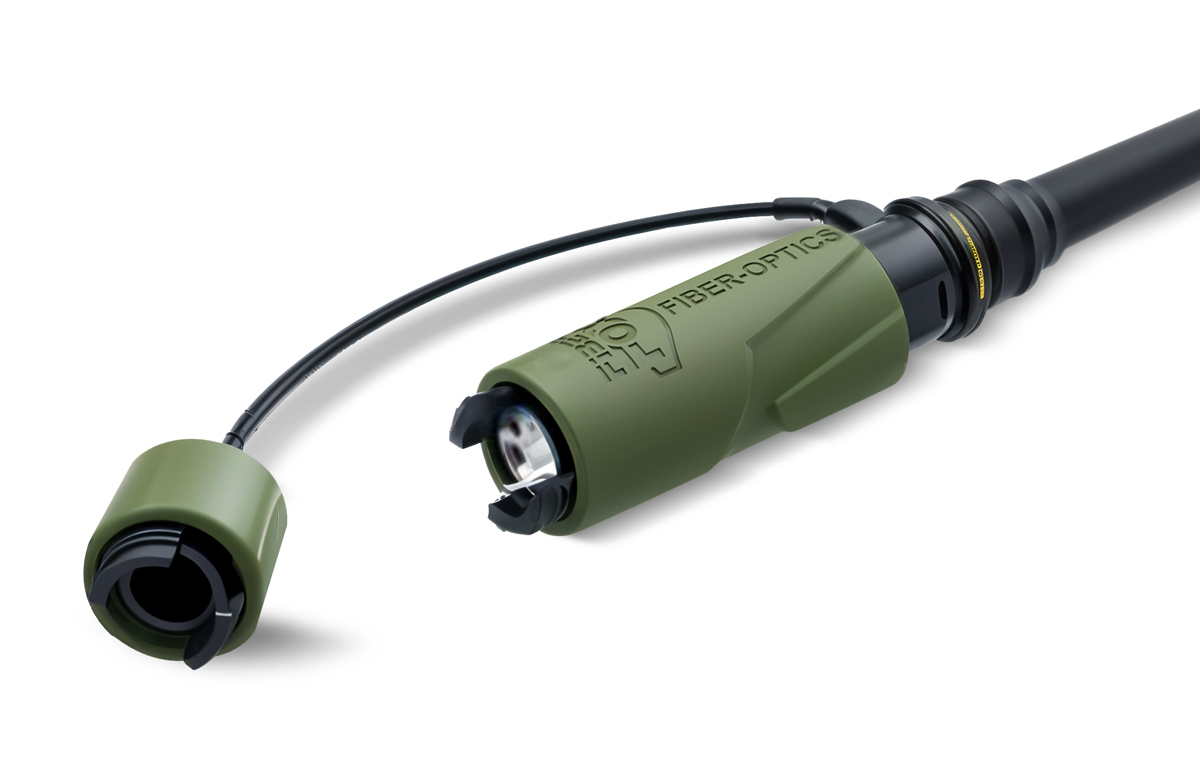
Fiber optic connectors in aerospace applications are crucial components that must maintain precise alignment to ensure minimal signal loss. The design of these connectors is critical, as even slight misalignment can result in significant signal degradation or complete loss of transmission.
Common types of fiber optic connectors used in aerospace include:
SC (Subscriber Connector):
Features: Push-pull coupling mechanism, spring-loaded ceramic ferrule
Applications: Widely used in telecommunications and networking systems within aircraft
Advantages: Low cost, good performance, easy to use
LC (Lucent Connector):
Features: Small form factor, push-pull coupling, ceramic ferrule
Applications: High-density applications in avionics, where space is at a premium
Advantages: Half the size of SC connectors, allowing for higher connector density
MT (Mechanical Transfer):
Features: Designed for multi-fiber connections, precision plastic or metal guide pins
Applications: High-density fiber applications in advanced avionics systems
Advantages: Can terminate many fibers in a single connector, saving space and weight
ARINC 801:
Features: Standardized for aerospace, robust design for harsh environments
Applications: Commercial and mil-spec aircraft, compliant with ARINC specifications
Advantages: Excellent performance in high-vibration environments
MIL-DTL-38999:
Features: mil-spec-grade circular connector, can incorporate fiber optic termini
Applications: Aircraft and aerospace mil-spec systems
Advantages: Rugged, environmentally sealed, suitable for severe aerospace conditions
Aerospace-specific connector standards often focus on ruggedized versions of these connectors, designed to withstand the harsh conditions of flight. Key features of aerospace fiber optic connectors include:
Enhanced durability:
Reinforced housings and strain relief to withstand vibration and shock
Environmental sealing:
Protection against moisture, dust, and other contaminants
Temperature resistance:
Ability to maintain performance across extreme temperature ranges
Easy maintenance:
Design features that allow for field cleaning and repair
The choice of connector depends on various factors including the specific application, environmental conditions, and system architecture. Engineers must consider factors such as insertion loss, return loss, and durability when selecting connectors for aerospace applications.
Copper Connectors
Copper connectors in aerospace applications are designed for reliability, ease of maintenance, and resistance to environmental factors. These connectors must ensure consistent electrical contact while withstanding the rigors of flight, including vibration, temperature extremes, and potential exposure to fluids.
Common types of copper connectors used in aerospace include:
D-subminiature (D-sub):
Features: Trapezoidal shape with two or three rows of pins
Applications: Widely used in various avionics and communication systems
Advantages: Compact design, variety of pin counts, locking mechanisms for secure connections
Circular connectors:
Features: Cylindrical housing with pins arranged in a circular pattern
Types:
MIL-DTL-38999: High-performance circular connectors for mil-spec and commercial aerospace
MIL-DTL-5015: General-purpose circular connectors
EN3645: High-density circular connectors for European aerospace applications
Applications: Power distribution, data transmission, sensor connections
Advantages: Quick connect/disconnect, superior environmental sealing, variety of sizes and configurations
Rectangular connectors:
Features: Rectangular housing with multiple pins in rows
Types:
ARINC 600: Standard for avionics equipment in commercial aircraft
MIL-DTL-83527: Rectangular connectors for mil-spec avionics
Applications: Rack-mounted avionics equipment, modular systems
Advantages: High-density pin arrangements, standardized form factors for easy integration
Micro-D connectors:
Features: Miniature version of D-sub connectors
Applications: Space-constrained areas in aircraft and satellites
Advantages: Very small size, high reliability, available in various pin counts
ARINC 810 Fiber Optic Connectors:
While primarily for fiber optics, these are worth mentioning as they represent a standardized approach in commercial aviation
Aerospace connector series such as AS39029 (for contact specifications) and EN3645 (for high-density circular connectors) ensure standardization and interoperability across different aircraft and systems. These standards define:
- Contact sizes and arrangements
- Environmental sealing requirements
- Electrical and mechanical performance criteria
- Materials and plating specifications
Key features of aerospace copper connectors include:
- Corrosion-resistant materials: Often using special alloys or plating to withstand harsh environments
- Positive locking mechanisms: To prevent disconnection due to vibration or shock
- EMI shielding: Especially important in connectors used for sensitive electronics
- Hermetic sealing: To prevent moisture ingress in certain applications
- High-reliability contacts: Often gold-plated to ensure consistent electrical performance
The selection of copper connectors in aerospace applications requires careful consideration of factors such as:
- Electrical requirements: Current carrying capacity, voltage rating, and signal integrity
- Environmental conditions: Temperature range, exposure to fluids, altitude considerations
- Mechanical requirements: Mating cycles, vibration resistance, size and weight constraints
- Regulatory compliance: Adherence to relevant mil-spec or civilian aerospace standards
Advancements in connector technology continue to push the boundaries of performance and reliability. Modern aerospace connectors often incorporate features like:
- Integrated sensors for health monitoring
- Hybrid designs that combine power, signal, and even optical connections in a single connector
- Advanced materials like composite housings to reduce weight
- Modular designs that allow for easy customization and maintenance
As aerospace systems become more complex and data-intensive, the role of connectors becomes increasingly critical. The right connector choice can significantly impact the overall performance, reliability, and maintainability of aerospace electrical and electronic systems.
Key Considerations in Aerospace Cable Design.
Environmental Factors
Aerospace cables must withstand some of the most challenging environmental conditions imaginable. The design and materials used in these cables are critical to ensuring reliable performance across a wide range of scenarios:
Temperature extremes:
Low temperatures: At high altitudes, temperatures can plummet to -65°C or lower. Cables must remain flexible and maintain their electrical properties in these conditions.
High temperatures: Near engines or in sun-exposed areas of spacecraft, temperatures can exceed +150°C. Insulation and jacket materials must resist melting or degradation.
Thermal cycling: Rapid temperature changes during ascent and descent put significant stress on cable materials.
Solution: Use of specialized polymers like PTFE (Teflon) or polyimide for insulation, and careful selection of conductor materials that maintain consistent electrical properties across temperature ranges.
Vibration and shock:
Continuous vibration during flight can lead to fatigue in cable materials and loosening of connections.
Shock events during takeoff, landing, or in-flight turbulence can stress cable assemblies.
Solution: Reinforced cable designs with additional braiding or jacketing, secure clamping and routing practices, and connectors with positive locking mechanisms.
Electromagnetic Interference (EMI) shielding:
Modern aircraft are packed with electronic systems that can interfere with each other if not properly shielded.
External sources of EMI, such as radar or lightning strikes, must also be mitigated.
Solution: Use of shielded cables with braided or foil shields, proper grounding techniques, and in some cases, additional EMI suppression components.
Altitude effects:
Low air pressure at high altitudes can lead to corona discharge in high-voltage systems.
Reduced cooling efficiency in low air density environments.
Solution: Careful insulation design to prevent partial discharge, and consideration of alternative cooling methods for high-power cables.
Moisture and condensation:
Exposure to high humidity, especially combined with temperature cycling, can lead to moisture ingress.
In space applications, condensation during ground operations can be a concern.
Solution: Use of moisture-resistant materials, hermetic sealing where necessary, and consideration of moisture management in cable assembly design.
Radiation exposure:
In space applications and high-altitude flight, radiation can degrade cable materials over time.
Solar radiation and cosmic rays are particular concerns for satellite and space vehicle cabling.
Solution: Selection of radiation-resistant materials, additional shielding, and redundancy in critical systems.
Chemical exposure:
Cables may be exposed to fuels, hydraulic fluids, cleaning agents, and de-icing chemicals.
These exposures can degrade cable jackets and insulation if not properly designed.
Solution: Use of chemically resistant jacket materials, and in some cases, additional protective coverings or conduits.
Atmospheric corrosion:
Salt spray in marine environments can accelerate corrosion of metal components.
Ozone at high altitudes can degrade certain polymers.
Solution: Use of corrosion-resistant materials and platings, and selection of ozone-resistant polymers for external cable jackets.
Performance Requirements
Signal integrity in aerospace environments:
High-speed data transmission must be maintained despite EMI and environmental challenges.
Signal attenuation and distortion must be minimized over long cable runs.
Solution: Use of high-quality dielectrics, precise impedance control, and advanced shielding techniques.
High-speed data transmission for avionics:
Modern aircraft require ever-increasing bandwidth for complex avionics systems.
Data rates in the gigabit range are becoming common in aerospace applications.
Solution: Development of specialized high-speed cable designs, often incorporating fiber optics or advanced copper cable constructions.
Power handling capabilities for aircraft systems:
Cables must efficiently distribute power throughout the aircraft while minimizing voltage drop.
High-current capacity must be balanced with weight considerations.
Solution: Use of optimized conductor designs, consideration of alternative materials like aluminum for weight reduction, and advanced insulation materials for improved thermal management.
Reliability and redundancy:
Aerospace cables often serve critical functions where failure is not an option.
Redundant systems may require separate cable runs with physical isolation.
Solution: Incorporation of redundant conductors or fiber strands, use of self-healing materials, and design for ease of inspection and maintenance.
Size and Weight Constraints
Miniaturization:
Space is at a premium in aerospace applications, requiring compact cable designs.
Smaller cables can reduce overall aircraft weight, improving fuel efficiency.
Solution: Use of high-density connectors, thin-wall insulation materials, and optimized cable constructions to maximize performance in minimal space.
Weight reduction:
Every gram saved in cable weight can contribute to increased payload capacity or fuel efficiency.
Weight reduction must be balanced with performance and durability requirements.
Solution: Exploration of lightweight materials like aluminum conductors, carbon nanotube composites, and optimized cable geometries to reduce weight without compromising performance.
Flexibility and routing:
Cables must be able to route through tight spaces and around complex structures.
Minimum bend radius requirements must be met to prevent damage during installation and use.
Solution: Development of highly flexible cable constructions, use of specialized jacketing materials, and design of custom cable assemblies for specific routing challenges.
Durability and Longevity
Wear resistance:
Cables in moving structures (e.g., landing gear, control surfaces) must withstand repeated flexing and abrasion.
Connector interfaces must maintain reliable contact over thousands of mating cycles.
Solution: Use of robust jacket materials, incorporation of additional reinforcement layers, and selection of high-durability connector designs.
Long-term reliability:
Aerospace cables are often expected to perform reliably for decades.
Maintenance and replacement can be extremely costly and challenging, especially in satellite applications.
Solution: Extensive life testing, use of materials with known long-term performance characteristics, and design for ease of inspection and maintenance where possible.
Fault tolerance:
Critical systems may require cables that can continue to function even if partially damaged.
Rapid fault detection and isolation capabilities are crucial for maintaining safety.
Solution: Incorporation of self-diagnostic features, use of redundant conductors or fiber strands, and design of cable systems with fault isolation capabilities.
Resistance to aging:
Materials must resist degradation from long-term exposure to heat, UV radiation, and other environmental factors.
Electrical and optical properties must remain stable over the lifespan of the aircraft or spacecraft.
Solution: Selection of materials with proven long-term stability, use of protective coatings or jacketing, and consideration of accelerated aging tests in the design validation process.
By carefully addressing these key considerations, aerospace cable designers can create solutions that meet the extreme demands of the industry, ensuring safe, reliable, and efficient operation of aircraft and spacecraft systems.

Applications in Aerospace.
Commercial Aircraft Systems
Cables and connectors are integral to various systems in commercial aircraft, forming the backbone of modern aviation technology:
Avionics and flight control systems:
Fly-by-wire systems: These advanced flight control systems rely on high-speed data transmission to convert pilot inputs into electrical signals for actuators. Fiber optic cables are often used due to their immunity to EMI and high bandwidth.
Navigation systems: GPS, Inertial Navigation Systems (INS), and radio navigation all require reliable data connections, often utilizing a mix of coaxial and fiber optic cables.
Weather radar: Coaxial cables are typically used to connect radar antennas to processing units, requiring excellent shielding to prevent interference with other systems.
In-flight entertainment and connectivity:
Passenger Wi-Fi: High-speed fiber optic backbones distribute internet connectivity throughout the aircraft.
Seat-back entertainment systems: Individual screens and control units require power and data connections, often using specialized aerospace-grade Ethernet cables.
Overhead displays: Power and video signals are distributed using shielded cables to prevent interference with aircraft systems.
Cabin management systems:
Lighting control: Both power distribution for lights and data cables for smart lighting systems.
Climate control: Sensors and control units are connected via robust, temperature-resistant cabling.
Passenger service units: Call buttons, air nozzles, and reading lights all require reliable low-voltage power and signal cables.
Power distribution:
Main power buses: Heavy-duty copper cables distribute power from generators to various aircraft systems.
Battery systems: High-current cables connect batteries to essential systems for backup power.
Communication systems:
Radio communications: Coaxial cables connect radio transceivers to antennas, requiring low signal loss and excellent shielding.
Satellite communications: High-frequency cables and waveguides for connections to satellite antennas.
Sensor systems:
Engine monitoring: High-temperature resistant cables connect various sensors to the engine control units.
Structural health monitoring: Fiber optic sensors embedded in the aircraft structure require specialized cabling solutions.
mil-spec Aircraft Systems
mil-spec aircraft require specialized cabling solutions to meet the demands of combat and tactical operations:
Mission-critical communications:
Secure data links: Shielded and encrypted communication systems use specialized cables to prevent interception and jamming.
Tactical radio systems: Robust, quick-disconnect cable assemblies for various radio frequencies.
Battlefield network integration: High-speed data buses to connect various onboard systems and external data links.
Weapons systems integration:
Targeting systems: Precision cabling for connecting sensors, computers, and displays in weapons targeting systems.
Weapons bay wiring: Specialized connectors and cables for connecting various types of ordnance to aircraft systems.
Electronic warfare pods: Quick-change cable assemblies for attaching and integrating external electronic warfare systems.
Electronic warfare capabilities:
Signal intelligence (SIGINT) systems: Highly shielded cabling for sensitive receivers and analyzers.
Radar warning receivers: Low-loss RF cables connecting antennas to processing units.
Countermeasure systems: Cables capable of handling high-power signals for jamming and deception systems.
Survivability features:
Redundant systems: Duplicate cabling routes and extra shielding for critical systems to enhance survivability.
Fire-resistant cabling: Specialized materials to maintain functionality even in extreme conditions.
Stealth technology:
Radar-absorbing materials: Integration of cabling with radar-absorbing structures to maintain low observability.
Emissions control: Heavily shielded cables to prevent electromagnetic emissions that could compromise stealth.
Advanced sensor suites:
Electro-optical/Infrared (EO/IR) systems: High-bandwidth cables for transmitting large amounts of sensor data.
Synthetic Aperture Radar (SAR): Specialized RF cabling for advanced radar systems.
Space Systems
Space applications present unique challenges for cabling, requiring solutions that can operate in the vacuum of space and withstand extreme radiation:
Satellite communications:
Transponder systems: Low-loss RF cables connecting receivers, transmitters, and antennas.
Inter-satellite links: High-speed optical or RF connections for satellite constellations.
Ground station interfaces: Robust cabling systems to withstand launch forces and operate reliably in orbit.
Space station infrastructure:
Power distribution: High-voltage DC power systems with specialized insulation for the space environment.
Life support systems: Reliable cabling for critical systems with redundant paths.
Scientific payloads: Flexible cabling solutions to accommodate various experiments and equipment.
Launch vehicle electronics:
Engine control systems: Cables designed to withstand extreme vibration and temperature during launch.
Telemetry systems: High-speed data cables for real-time monitoring during ascent.
Stage separation mechanisms: Reliable quick-disconnect systems for multi-stage rockets.
Planetary exploration rovers:
Mobility systems: Flexible, cold-resistant cabling for wheel motors and actuators.
Scientific instruments: Specialized interfaces for various sensors and analytical tools.
Communication systems: Robust cabling for long-range communication with Earth or orbital relays.
Space-based observatories:
Large antenna arrays: Precision cabling for maintaining phase relationships in radio telescopes.
Cryogenic systems: Cables designed to operate at extremely low temperatures for infrared and X-ray detectors.
Human spaceflight:
Spacesuit systems: Flexible, durable cabling for life support and communication in extravehicular activity (EVA) suits.
Docking systems: High-reliability connectors for power and data transfer between spacecraft.
In all these aerospace applications, cables and connectors must not only meet the functional requirements, but also adhere to strict aerospace standards for reliability, safety, and performance in extreme environments.
Aerospace Standards and Certifications.
DO-160 Environmental Conditions and Test Procedures
RTCA DO-160 — “Environmental Conditions and Test Procedures for Airborne Equipment” — is a crucial standard in the aerospace industry. It defines a comprehensive set of test conditions for airborne equipment, including cables and connectors:
- Scope: Covers a wide range of environmental factors, including temperature variation, humidity, vibration, power input, RF susceptibility, lightning, and electrostatic discharge.
- Significance: Compliance with DO-160 is often required for FAA certification of aircraft components.
- Key sections for cabling:
- Section 4: Temperature and Altitude
- Section 5: Temperature Variation
- Section 6: Humidity
- Section 7: Operational Shocks and Crash Safety
- Section 8: Vibration
- Section 9: Explosive Atmosphere
- Section 21: Emission of Radio Frequency Energy
- Section 22: Lightning Induced Transient Susceptibility
AS9100 Quality Management Systems
AS9100 is the quality management system standard specifically for the aerospace industry:
- Basis: Built on ISO 9001, with additional requirements particular to aerospace.
- Key aspects:
- Risk Management: Emphasizes identifying and mitigating risks in the product lifecycle.
- Configuration Management: Ensures proper control of design and development changes.
- Special Requirements: Addresses critical items and key characteristics unique to aerospace.
- Relevance to Cabling: Ensures that cable and connector manufacturers maintain high-quality standards in design, production, and testing.
ARINC Standards for Avionics
ARINC (Aeronautical Radio, Incorporated) standards define common practices in aircraft systems:
- ARINC 429: Defines a widely used avionics data bus, specifying electrical characteristics and protocols.
- ARINC 600: Specifies form factors for avionics equipment, including connector types.
- ARINC 664 (AFDX): Defines Ethernet-based avionics network, impacting cabling requirements.
- ARINC 801: Standardizes fiber optic connectors for aerospace applications.
Other Relevant Aerospace Certifications
Compliance with these standards and certifications ensures that aerospace cables and connectors meet the rigorous demands of the industry, promoting safety, reliability, and interoperability across different aircraft and space systems.
- MIL-STD-810: Environmental Engineering Considerations and Laboratory Tests
- Used by Aerospace industries to test equipment under various environmental stresses.
- Includes tests for temperature, humidity, vibration, shock, and more.
- FAA Regulations:
- Part 25 covers transport category airplanes
- Advisory Circulars (e.g., AC 43.13-1B) provides guidance on acceptable methods for aircraft wiring
- ESA ECSS (European Cooperation for Space Standardization):
- ECSS-Q-ST-70-08C: Manual soldering of high-reliability electrical connections
- ECSS-Q-ST-70-26C: Crimping of high-reliability electrical connections
- NASA Standards:
- NASA-STD-8739.4: Crimping, Interconnecting Cables, Harnesses, and Wiring
- NASA-STD-8739.5: Fiber Optic Terminations, Cable Assemblies, and Installation
- SAE Standards:
- AS50881: Wiring Aerospace Vehicle
- AS81714: Wiring Harness Design Guidelines
- IPC Standards:
- IPC/WHMA-A-620: Requirements and Acceptance for Cable and Wire Harness Assemblies
Custom Cable Solutions for Aerospace.
Design Process
Developing custom cable solutions for Aerospace applications involves a meticulous process:
- Requirements Analysis:
- Gather specific application needs: environmental conditions, electrical requirements, mechanical stress, etc.
- Review applicable standards and regulations
- Define performance criteria and constraints
- Material Selection:
- Conductors: Choose appropriate metals (e.g., copper, aluminum, silver-plated copper) based on electrical and weight requirements
- Insulation: Select materials (e.g., PTFE, ETFE, Kapton) based on temperature range, chemical resistance, and electrical properties
- Shielding: Determine shielding type (braided, foil, or combination) based on EMI/RFI requirements
- Outer jacket: Choose materials for environmental protection and mechanical durability
- Electrical Design:
- Determine conductor size based on current carrying capacity and voltage drop calculations
- Design for signal integrity, considering impedance control, crosstalk, and attenuation
- Incorporate appropriate shielding and grounding schemes
- Mechanical Design:
- Create cable cross-section and overall assembly drawings
- Design strain relief and cable routing to minimize mechanical stress
- Consider flexibility, bend radius, and any unique installation requirements
- Prototyping:
- Produce initial prototypes for testing and evaluation
- Conduct preliminary tests to verify basic functionality and manufacturing feasibility
- Testing and Validation:
- Perform electrical tests: continuity, insulation resistance, dielectric withstand voltage, signal integrity
- Conduct environmental tests: temperature cycling, humidity, altitude, vibration
- Carry out mechanical tests: flexing, abrasion resistance, tensile strength
- Design Iteration:
- Analyze test results and make necessary design adjustments
- Repeat prototyping and testing as needed to optimize performance
- Documentation and Certification:
- Prepare detailed specifications and manufacturing instructions
- Compile test reports and certification documents
- Obtain necessary approvals from relevant authorities (FAA, DoD, etc.)
- Production Planning:
- Develop manufacturing processes and quality control procedures
- Create tooling and fixtures for production
- Establish supply chain for specialized materials
Manufacturing Considerations for Flight-Critical Components
Producing cables for flight-critical systems requires extraordinary attention to detail and quality control:
- Clean Room Environments:
- Use of controlled environments to minimize contamination, especially crucial for fiber optic cable production
- Implementation of electrostatic discharge (ESD) protection measures
- Specialized Tooling and Processes:
- Custom tooling for unique cable configurations
- Precision stripping and termination equipment to ensure consistent quality
- Automated testing systems for 100% verification of critical parameters
- Material Traceability:
- Implement lot tracking systems for all materials used in cable production
- Maintain detailed records of material certifications and test results
- Rigorous In-Process Quality Control:
- Implement multiple inspection points throughout the manufacturing process
- Use of high-magnification visual inspection for critical connections
- Continuous monitoring of process parameters (e.g., crimping force, stripping depth)
- Specialized Workforce Training:
- Certification programs for operators working on flight-critical components
- Regular skill assessments and retraining to maintain high standards
- Controlled Manufacturing Processes:
- Use of detailed work instructions and process controls
- Implementation of mistake-proofing (poka-yoke) techniques to prevent errors
- Environmental Controls:
- Strict control of temperature and humidity in manufacturing areas
- Monitoring and filtration of air quality to prevent contamination
Aerospace Quality Assurance and Testing
Quality assurance in aerospace cable manufacturing goes beyond standard industrial practices:
- Non-Destructive Testing Techniques:
- X-ray inspection for checking internal cable structure and connector terminations
- Ultrasonic testing for detecting voids or inconsistencies in insulation
- Thermal imaging for identifying potential hot spots or irregularities
- Environmental Stress Screening (ESS):
- Subjecting cables to accelerated environmental stresses to identify potential weaknesses
- May include temperature cycling, vibration, and humidity exposure
- Accelerated Life Testing:
- Simulating long-term use conditions to predict cable lifespan and identify potential failure modes
- Often involves exposure to multiple stressors simultaneously (e.g., heat, vibration, and electrical load)
- Electrical Testing:
- Automated testing of every produced cable for continuity, insulation resistance, and dielectric strength
- Time Domain Reflectometry (TDR) for identifying impedance mismatches or damage in cables
- Signal integrity testing for high-speed data cables
- Mechanical Testing:
- Pull testing to verify termination strength
- Flex and torsion testing to simulate in-service conditions
- Vibration and shock testing to aerospace standards
- Batch Testing and Certification:
- Sample testing from each production batch to verify compliance with specifications
- Issuance of Certificates of Conformance (CoC) with detailed test results
- Failure Analysis and Continuous Improvement:
- Detailed analysis of any failures or non-conformities
- Implementation of corrective actions and design improvements based on field data and test results
- Configuration Management:
- Strict control of design changes and revision levels
- Maintenance of detailed records for each cable configuration and its approved applications
- Supply Chain Quality Management:
- Rigorous qualification and monitoring of suppliers
- Regular audits of key suppliers to ensure compliance with aerospace quality standards
By adhering to these stringent design, manufacturing, and quality assurance practices, aerospace cable manufacturers can produce components that meet the exacting standards required for flight-critical systems. This approach ensures the safety, reliability, and performance of aerospace cables in the most demanding applications.
Future Trends in Aerospace Cabling.
Advancements in Fiber Optic Technology
- Higher Bandwidth Capabilities:
- Development of multi-core fibers to increase data capacity without increasing cable diameter
- Advancements in wavelength division multiplexing (WDM) for more efficient use of fiber bandwidth
- Exploration of hollow-core fibers for lower latency and higher-speed transmission
- Plastic Optical Fibers (POF):
- Increased use of POF for short-range, high-bandwidth applications within aircraft
- Development of more durable and heat-resistant POF materials for aerospace environments
- Integration of POF in fly-by-light systems for improved EMI immunity
- Integrated Photonics:
- Miniaturization of optical components through silicon photonics technology
- Development of photonic integrated circuits (PICs) for compact, high-performance optical systems
- Integration of optical interconnects directly on electronic circuit boards
- Radiation-Hardened Fibers:
- Advanced fiber designs to withstand high radiation environments in space applications
- Development of self-healing fiber materials

Choosing the Right Cable and Connector Solution.
Factors to Consider
Selecting the appropriate cable and connector solution for aerospace applications is a critical decision that impacts the safety, performance, and longevity of aircraft and spacecraft systems. Key factors to consider include:
- Application-specific requirements:
- Data rate and bandwidth needs
- Power transmission requirements
- Signal type (analog, digital, RF, optical)
- Environmental conditions (temperature, pressure, vibration, etc.)
- Compliance with aerospace standards:
- Relevant mil-spec or civilian standards (e.g., MIL-STD, AS, ARINC)
- Certification requirements (e.g., FAA, EASA, NASA)
- Physical constraints:
- Available space for cable routing
- Weight limitations
- Bend radius requirements
- Connector mating and unmating accessibility
- Environmental resistance:
- Temperature range
- Moisture and fluid resistance
- Radiation tolerance (for space applications)
- Resistance to vibration and shock
- Electromagnetic compatibility:
- Shielding effectiveness
- Crosstalk minimization
- Compliance with EMI/EMC standards
- Reliability and durability:
- Expected lifespan of the aircraft or spacecraft
- Maintenance intervals and accessibility
- Redundancy requirements
- Performance characteristics:
- Signal integrity over required distances
- Impedance matching
- Attenuation and loss characteristics
- Connector considerations:
- Mating cycles
- Sealing against environmental factors
- Locking mechanisms for vibration resistance
- Ease of assembly and field repairability
- Material compatibility:
- Resistance to fuels, oils, and cleaning agents
- Outgassing properties (especially for space applications)
- Flammability and smoke emission characteristics
- Cost and availability:
- Total cost of ownership, including maintenance and potential replacement
- Lead times for specialized components
- Availability of alternative sources for critical components
Working with a Specialized Manufacturer.
Collaborating with a manufacturer that specializes in aerospace cable and connector solutions like MCC offers several advantages:
- Expertise in aerospace regulations and standards:
- In-depth knowledge of complex aerospace requirements
- Experience with certification processes and documentation
- Ability to navigate evolving standards and regulations
- Custom design capabilities:
- Tailored solutions for unique aerospace applications
- Optimization of cable and connector designs for specific aircraft or spacecraft systems
- Rapid prototyping and iterative design processes
- Advanced manufacturing capabilities:
- Clean room facilities for critical component production
- Specialized equipment for aerospace-grade cable and connector manufacturing
- Rigorous quality control processes aligned with aerospace standards
- Comprehensive testing and certification services:
- In-house testing facilities for environmental, electrical, and mechanical validation
- Ability to perform qualification testing to aerospace standards
- Generation of required documentation for certification submissions
- Material science knowledge:
- Expertise in selecting and developing materials for extreme aerospace environments
- Understanding of long-term material behavior in aerospace applications
- Access to specialized aerospace-grade materials
- System-level understanding:
- Ability to consider cable and connector solutions in the context of overall aircraft or spacecraft systems
- Experience with integration challenges and interface management
- Knowledge of typical failure modes and mitigation strategies in aerospace applications
- Long-term support and obsolescence management:
- Commitment to supporting products throughout the long lifecycles typical in aerospace
- Strategies for managing component obsolescence and technology upgrades
- Ability to provide ongoing technical support and failure analysis
- Supply chain management:
- Established relationships with aerospace-qualified suppliers
- Robust supplier qualification and monitoring processes
- Ability to manage long-lead items and critical components
- Continuous improvement and innovation:
- Investment in research and development for next-generation aerospace cable and connector technologies
- Ability to incorporate lessons learned from field performance into future designs
- Proactive approach to addressing emerging aerospace challenges
- Global support and certifications:
- Ability to support international aerospace programs
- Familiarity with global aerospace standards and certification requirements
- Local support in key aerospace manufacturing regions
By carefully considering these factors and working closely with a specialized aerospace cable and connector manufacturer, aerospace system designers can ensure they select the optimal solutions for their specific applications, maximizing performance, reliability, and safety.
Procuring Connector Components through MCC.
High-Quality Cables and Connectors in Aerospace Support the Entire System
High-quality cables and connectors integrate various aerospace technologies together reliably, providing the critical links that enable modern aircraft and spacecraft to function safely and efficiently. Success in any project depends on the quality and suitability of interconnect components in a number of areas:
- Safety-critical systems: Cables and connectors form the nervous system of aerospace vehicles, transmitting vital signals for flight control, navigation, and life support systems. Their reliability directly impacts the safety of crew and passengers.
- Performance enablers: Advanced avionics, high-speed data networks, and sophisticated sensor systems all rely on state-of-the-art cabling solutions to achieve their full potential.
- Weight and space optimization: In an industry where every gram matters, innovative cable and connector designs contribute significantly to overall weight reduction and space utilization efficiency.
- Environmental resilience: The ability of aerospace cables and connectors to perform reliably in extreme conditions – from the frigid temperatures of high altitude to the vacuum of space – is crucial for mission success.
- Longevity and maintainability: With aircraft and spacecraft designed for decades of service, the durability and ease of maintenance of cabling systems play a key role in reducing lifecycle costs and downtime.
- Electromagnetic compatibility: In the electrically noisy environment of modern aerospace vehicles, well-designed cables and connectors are essential for ensuring clean signal transmission and protecting sensitive electronics.
- Technological advancement: As aerospace technology continues to evolve, cables and connectors are at the forefront of innovation, enabling higher data rates, more efficient power distribution, and integration of new capabilities.
Contact MCC for Custom Solutions.
Complex aerospace projects frequently require specifications difficult to match with standard parts. In addition to standard catalog connectors, MCC offers customized, high-performance connectivity, cabling, and cable assembly solutions. Whether you’re developing next-generation aircraft systems, upgrading existing fleets, or pushing the boundaries of space exploration, you have a knowledgeable engineering and manufacturing partner with MCC.
To meet specifications through custom connectors, consider the following actions:
- Evaluate your current and future needs: Assess your aerospace projects’ cabling requirements, considering not just immediate needs but future expansions and upgrades.
- Consult with specialists: Engage with aerospace cabling experts to explore how custom solutions can enhance the performance, reliability, and efficiency of your systems.
- Invest in quality: Recognize that while high-quality aerospace cables and connectors may have higher upfront costs, they offer significant long-term benefits in reliability, performance, and reduced maintenance.
- Embrace innovation: Stay open to new technologies and materials in the aerospace cabling field that could provide competitive advantages or solve longstanding challenges.
- Prioritize partnerships: Develop strong relationships with cable and connector manufacturers who understand the unique demands of the aerospace industry and can provide ongoing support throughout your project’s lifecycle.
- Focus on certification and compliance: Ensure your cabling solutions meet or exceed all relevant aerospace standards and certification requirements, working with manufacturers who can navigate this complex landscape.
- Consider the full system: Look at cabling as an integral part of your overall aerospace system design, not just as an afterthought or commodity component.
By choosing MCC, an experienced provider with expertise in custom aerospace solutions, you ensure that your projects benefit from the latest advancements in materials, design, and manufacturing processes. This approach not only addresses current challenges but also positions your aerospace systems for future growth and innovation.
In aerospace, failure is not an option. Investing in high-quality, custom-engineered cable and connector solutions is not just a technical decision – it’s a commitment to safety, performance, and technological leadership. For assistance in your project, contact a knowledgeable technician from MCC today.