
We live in an information age. It seems that every device, from the smallest smartphone to the largest aero engine, forms part of a global network. Computers have evolved over the past few decades to cope with the demand for data and now form part of the complex global infrastructure we see today.
The ability to link computers together has been an important tool for business. The office network was powered by systems whose names are now part of everyday speech. From Ethernet to TCP/IP, technology that was once the domain of specialist engineers is now found in every home, office, and factory.
From Local to Global
The first networks were purely local systems, leading to the widely used name of Local Area Networks. With the advent of the internet, the need to link computer systems to the outside world saw networks employing telephone technology to provide the all-important connection.
The 66 block is a simple device that terminates and connects twisted pair wiring. Named after the part number in the original Western Electric product catalog, the 66 block has become an important component in telephone systems, but as a result of its widespread
use, it has found its way into data networking applications.
As the demand for data connections grew and transmission speeds increased, the limitations of the 66 block have become clear. Despite its ease of use, modern digital communications require a much more capable system. However, the twisted pair format remains at the heart of modern networking systems.

Twisted Pairs
One of the greatest challenges associated with transmitting high-speed data through copper cabling occurs when the conductors pick up external electromagnetic interference (EMI). The quality of the signals passing through the network is known as signal integrity, and preventing EMI is key to its maintenance.
To counter EMI, twisted pair cables transmit an electrical signal through one wire with a return signal traveling through the other. The return uses differential signaling, in which the current in one wire is equal and opposite to the current in the other. Any external electromagnetic radiation affects both wires equally. Interference is cancelled out and signal integrity is maintained.
Twisting also minimizes a phenomenon known as crosstalk. Unwanted signals can be created between adjacent pairs of wires within the same cable. The alternating twists reduce the chance that the signals will interfere with each other.
Computer networks make extensive use of twisted pair cabling, which has continued to evolve to cope with the ever-higher data rates demanded by today’s business world. In its current form, it provides a standardized structure to accommodate the different types of
wiring needed for voice, data and video streaming.
The modern twisted pair cable that is in common use features 8 wires arranged in 4 pairs. As cable technology has evolved, a series of categories has emerged to describe their performance. The current leading edge of Ethernet systems, 1000BASE-T or Gigabit Ethernet, transmits at a speed of more than 1 Gigabits per second (Gbps), using Category 7 (CAT7) cables.
Structured Wiring
In addition to the evolution of transmission speed, twisted pair cables differ in construction depending upon their role in the structure.
Riser Cabling
Riser cabling is used as the backbone of any network. It is frequently found running from floor to floor, an application that provides its name. However, it is also used in any application where the cable is to be static. Each individual conductor of a riser cable is made of a single, solid strand which gives the best signal strength over long distances. This construction also provides greater strength, making it easier to install.
Patch Cables
Patch cable is used in situations where movement is expected. The conductors of patch cable are stranded, making them far more flexible than the solid wires of the riser cable. Patch cables are used to connect computer to wall-mounted outlets or to route networks through patch panels. For service in the safe conditions of the office or computer room, both patch and riser cables are terminated using the small 8-pole RJ45 connector.

Modern Networks
Trends in computing have witnessed the network extend beyond the office. The Internet of Things (IoT) is changing the way we use technology. It allows computers to share data with each other, creating a network of autonomous devices. These devices can then make decisions without human intervention. The IoT can be found in the home, with smart meters and smartphone integration. In the industrial world, it has resulted in the smart factory.
Each machine within the factory is connected to the network, sharing information about its own function and status. This information not only allows the efficient running of the factory, but it makes it possible to react quickly to changes as instructions can be quickly sent to the entire network. Using Ethernet technology, each machine can be connected quickly, making expansion or reconfiguration easy.
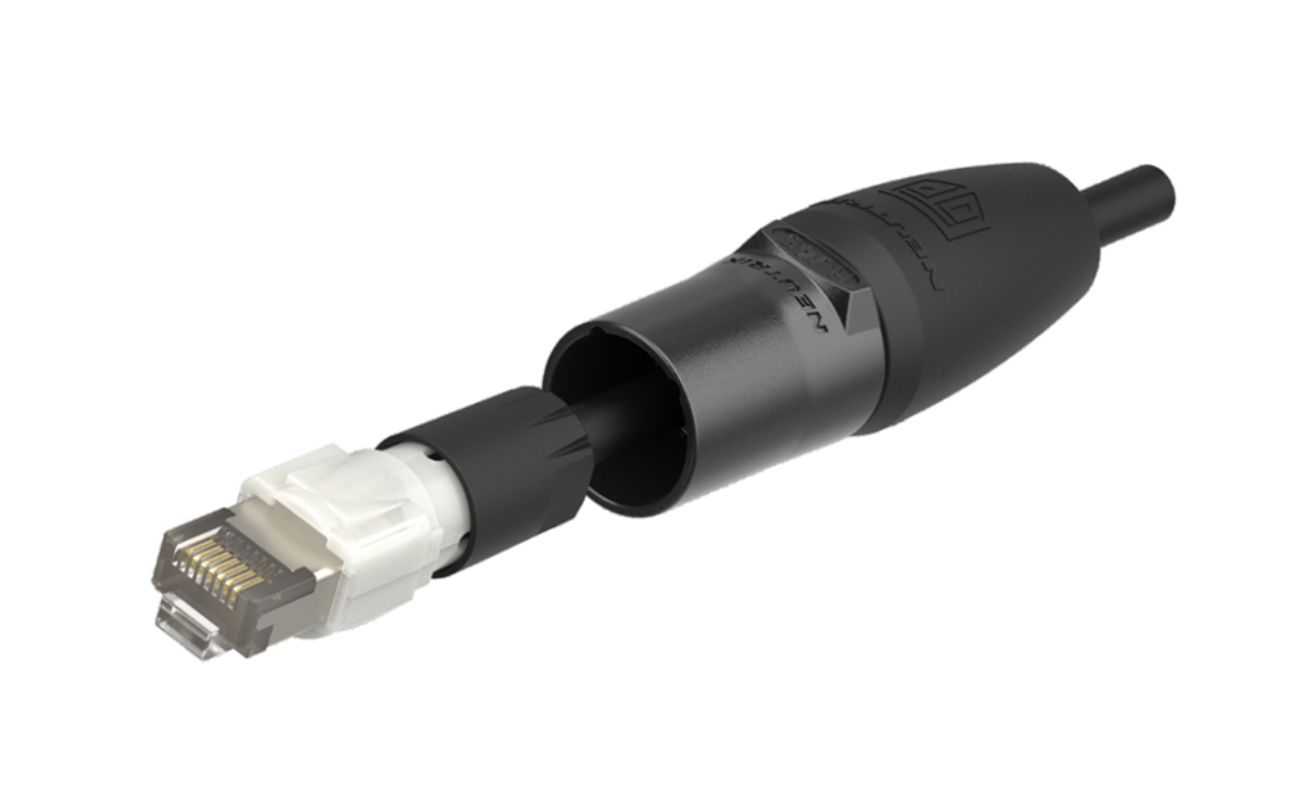
This functionality is not limited to the traditional factory. Many industries have adopted Ethernet networks and introduced them into more demanding environments. Whatever the application, network cabling will need to survive in the outside world. To make them more robust, the fragile RJ45 connector can be protected in a more suitable housing, such as the Ethercon from Neutrik. While it is optimized for professional audio, video, and lightning network applications, Ethercon is an ideal connector for use when the network must go beyond the safety of the office.
Is It Time to Upgrade?
The Ethernet network provides excellent service in offices and factories around the world, but our appetite for data is growing. The Internet of Things, along with other demands such as video conferencing and streaming services, means that our networks need greater capacity.
Is your network up to the task, or is it creaking at the seams? When the time comes to upgrade your network, Major Custom Cable is ideally equipped to make the change. With extensive experience in creating cables to exacting standards, MCC understands that each network is different. Choose MCC to help make your network ready for the future.